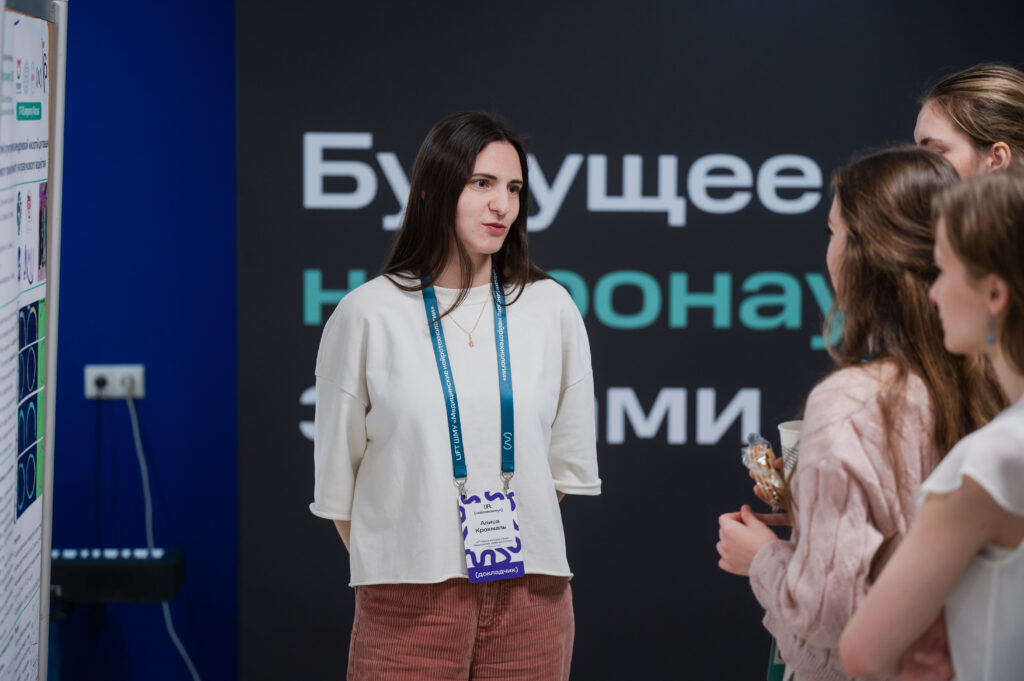
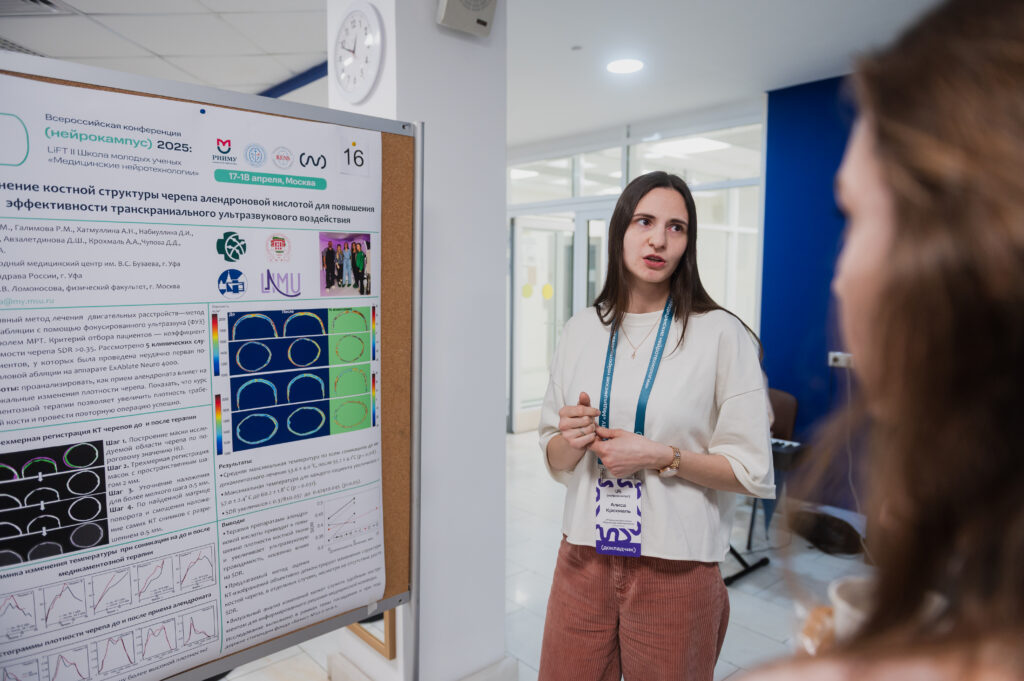
On April 17-18 2025, the Pirogov Russian National Research Medical University hosted the “Medical Neurotechnologies” LiFT-2025 Young Scientists School, where LIMU research fellow Alisa Krokhmal presented the results of a joint study by LIMU and the V.S. Buzaev International Medical Center. The talk was based on a collaborative study by the V.S. Buzaev International Medical Center and LIMU, focusing on the use of bisphosphonate therapy to improve outcomes in magnetic resonance imaging (MRI)-guided focused ultrasound (FUS) thermal ablation.
Traditionally, patient selection for this procedure relies on the metrics of skull ultrasound conductivity – the skull density ratio (SDR) with a threshold value of > 0.35. However, the study revealed that SDR does not always accurately reflect the skull actual ultrasound permeability. The research analyzed five clinical cases where the initial thermal ablation attempt failed despite acceptable SDR values (ranging from 0.32 to 0.42).
After 6–12 months of the suggested therapy with alendronic acid, vitamin D, and calcium supplements, four out of five patients showed an increase in SDR (average from 0.378 to 0.424), and the repeat FUS procedure under MRI guidance was successful. Notably, even in one case where SDR decreased (from 0.39 to 0.37), the procedure was performed effectively.
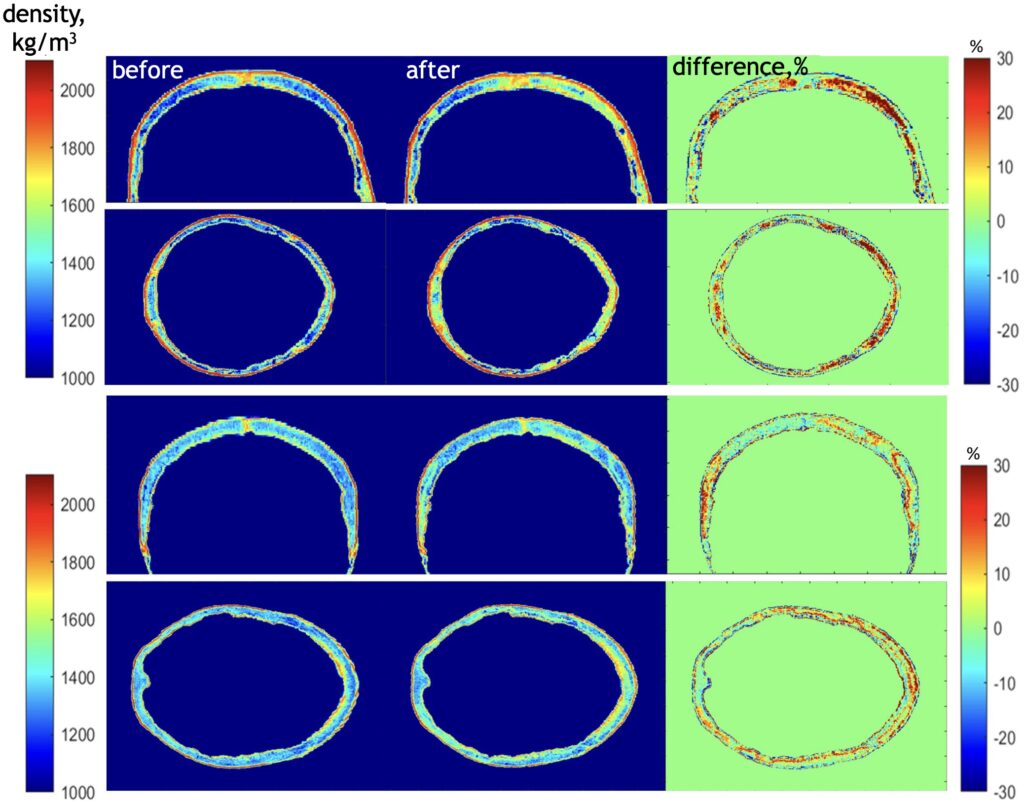
Analysis of CT images demonstrated that the therapy led to bone tissue densification: the proportion of voxels with low Hounsfield units decreased, while the proportion with high radiodensity increased. This confirmed that visual assessment of skull density changes could be more informative than relying solely on SDR metrics.